Participatory art project – Oldofredi Castle (Iseo) 9-24/11 2024
The message in the bottle has a very ancient history dating back thousands of years, with the first documented example dating back to ancient Greece. The Greek philosopher Theophrast (about 310 BC), a disciple of Aristotle, used bottles to conduct experiments with ocean currents. His goal was to prove that the Mediterranean Sea was fed by the Atlantic, sending bottles into the sea and observing where they would land. Nothing romantic and adventurous then, the message in the bottle was originally used for very practical and scientific purposes. Only in the twentieth century did it take on a symbolic and romantic value. Following some research carried out according to this project, a particularly interesting and mysterious figure emerged unexpectedly: the “Uncorker of Ocean Bottles” who has become a source of great inspiration.
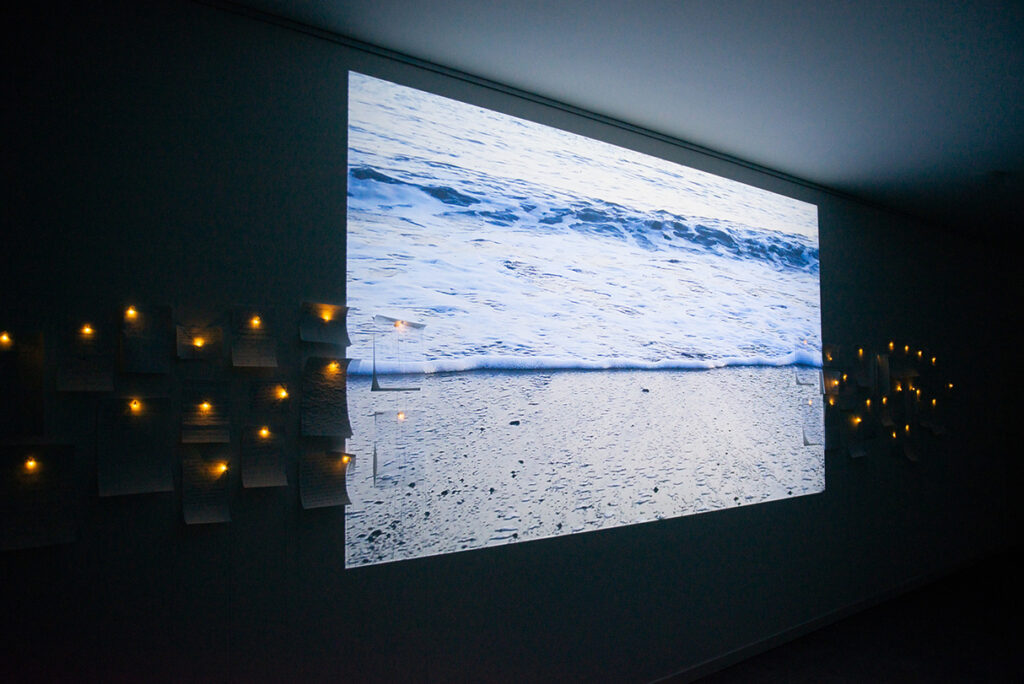
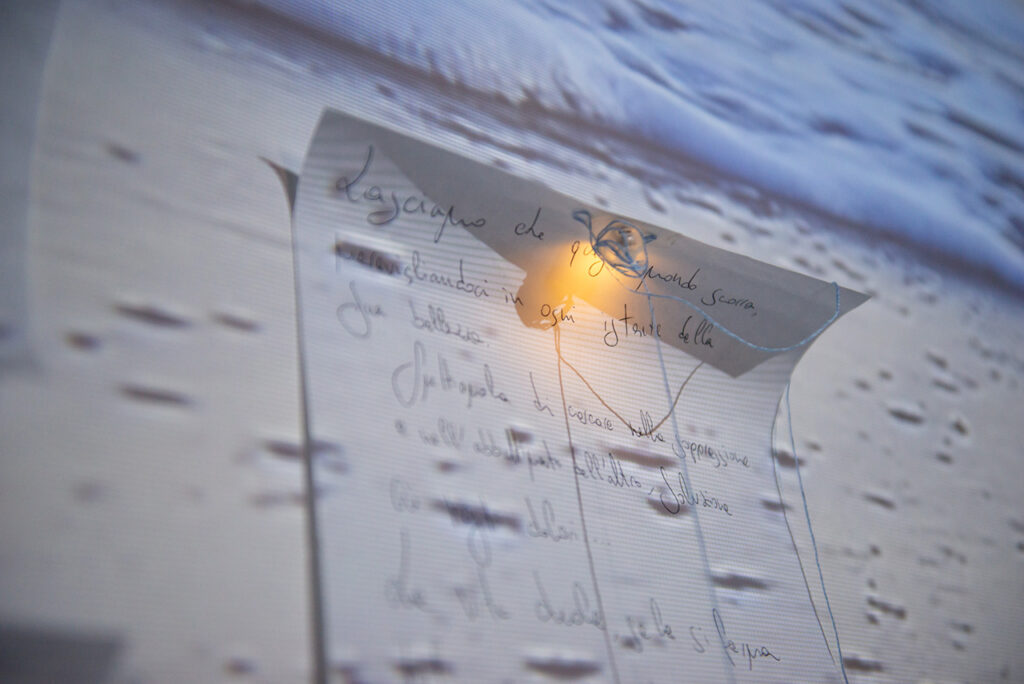
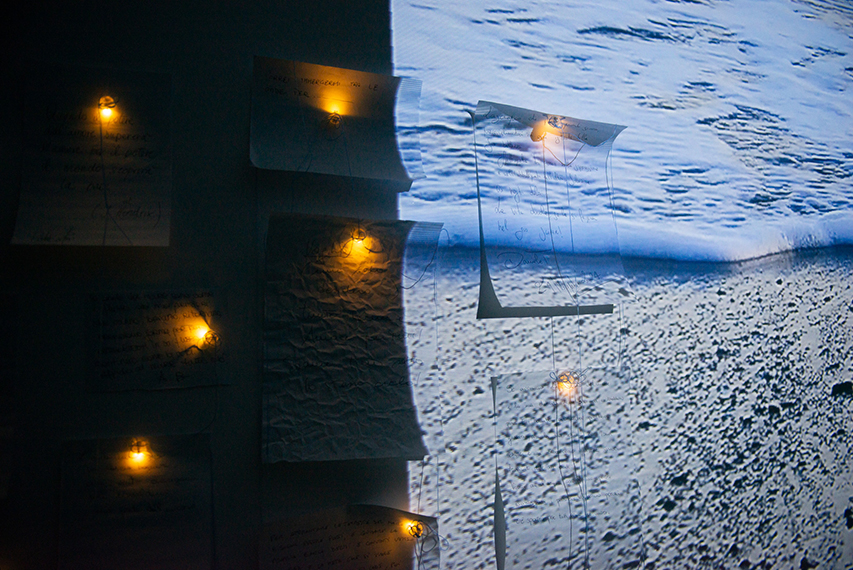
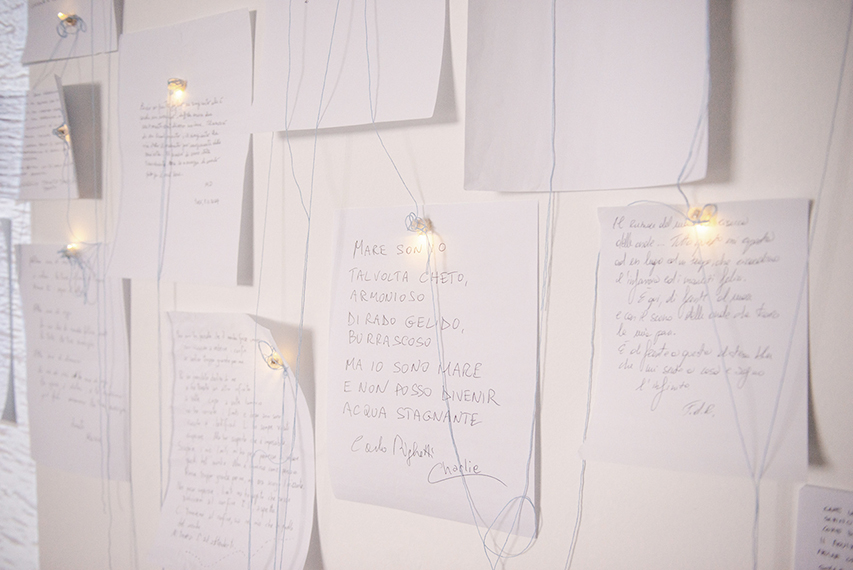
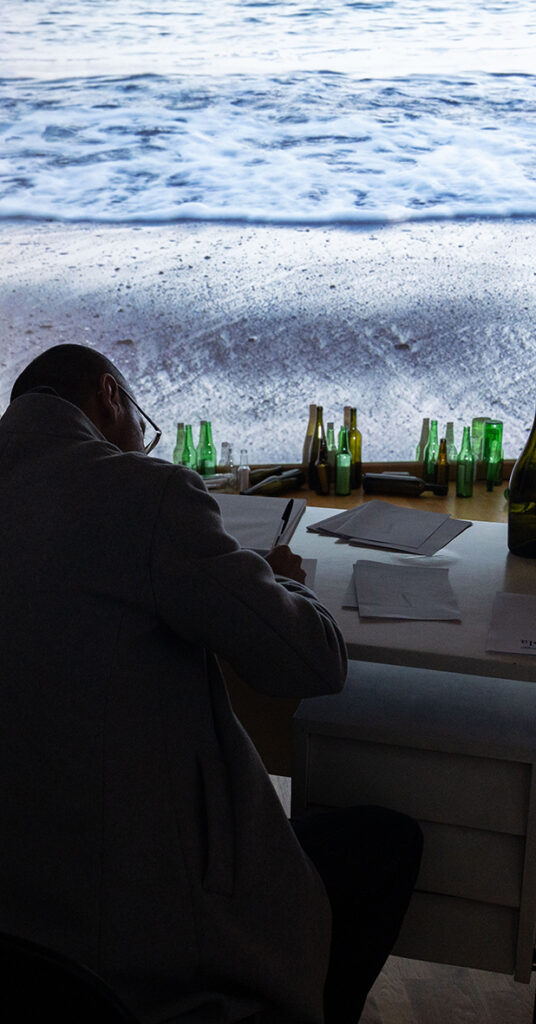
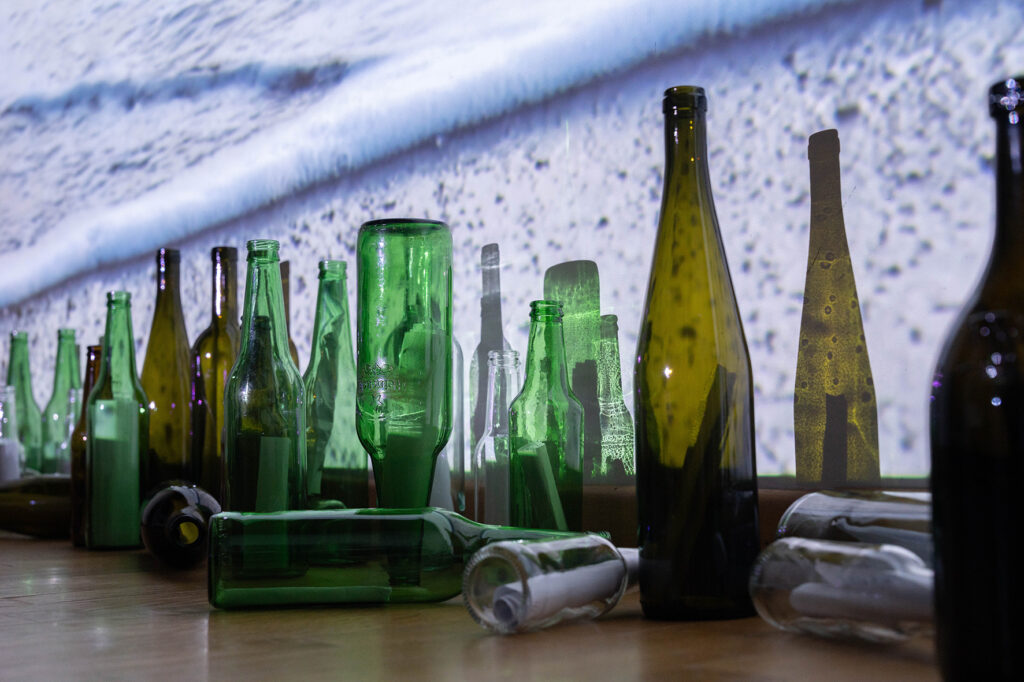
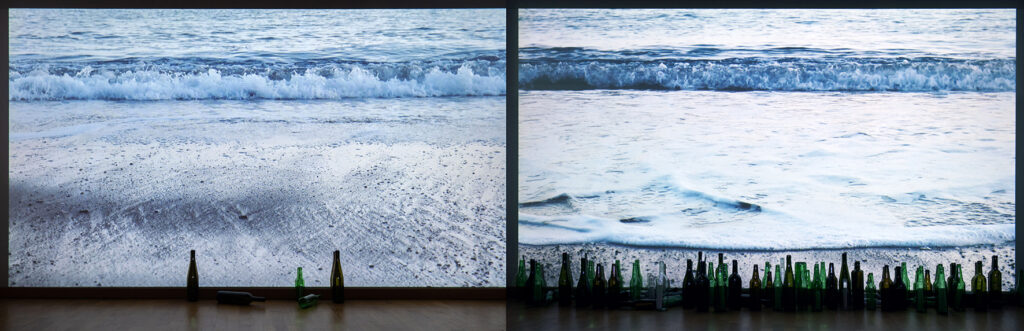
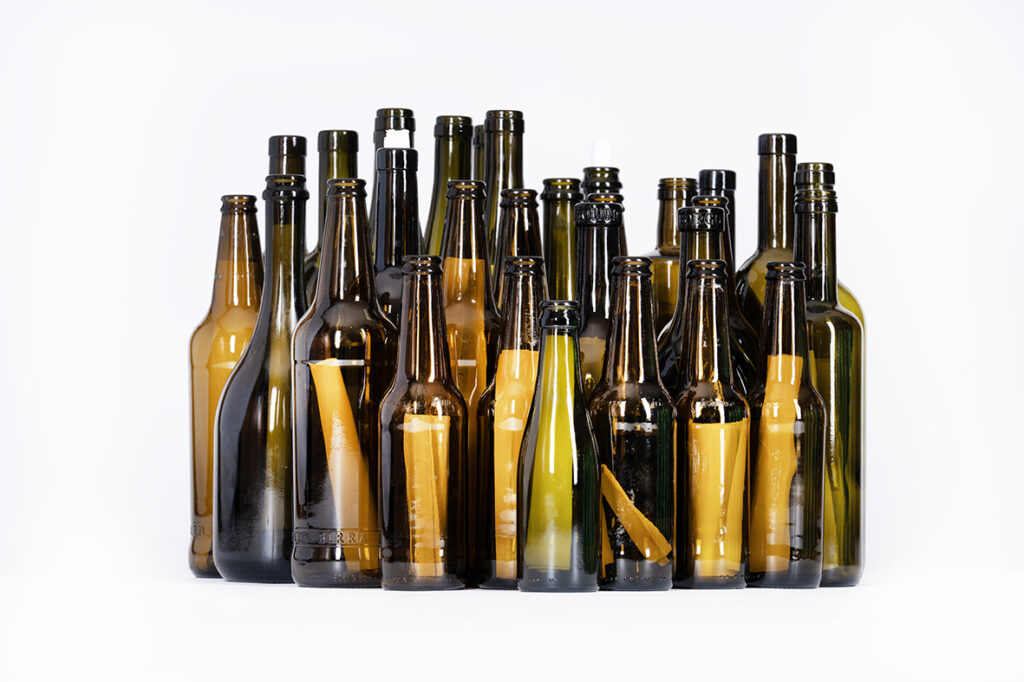
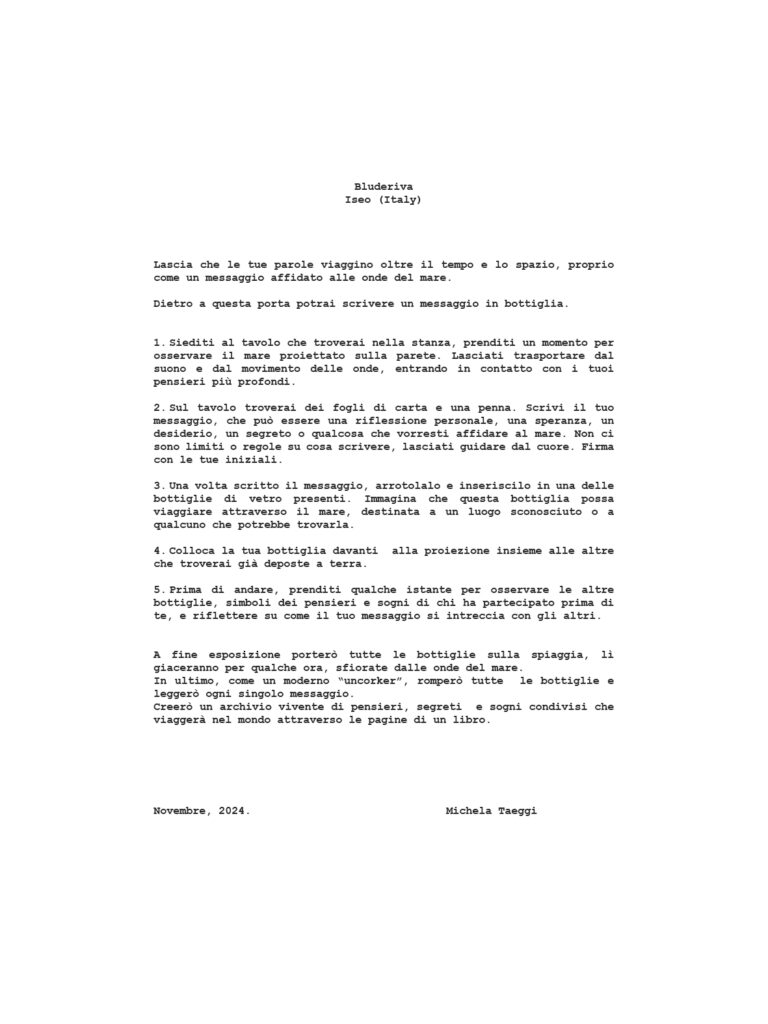
The “Uncorker of Ocean Bottles” was an official figure established by Henry VII, King of England from 1485 to 1509. His job was to examine the bottles that arrived on the British coast, often carrying messages of a military nature. These bottle messages were generally sent by spies or sailors in distress, containing vital information about the movements of enemy fleets, warnings of imminent attacks, or distress calls. The interpretation and management of such messages were fundamental to the military strategy of the time. This role has left a lasting legacy in the history of maritime communication and remains a symbol of the power of words and messages, even when entrusted to the waves of the sea. “Bluderiva” is a participatory art project that invites visitors to immerse themselves in a collective reflection through the symbolic power of the sea and the intimate gesture of writing. In an exhibition space wrapped in a large video projection of a moving sea, participants were invited to write their own “message in a bottle”; a thought, a hope, a never confessed secret or a personal wish. Bottles, day after day, have increasingly invaded the exhibition space. The work evolves continuously thanks to the contribution of the public, becoming a map of emotions, thoughts and collective dreams, navigating between the intimate and the universal. This project intends to explore the human need to communicate beyond one’s own space and time, emphasizing the deep bond between the individual and the world around him.
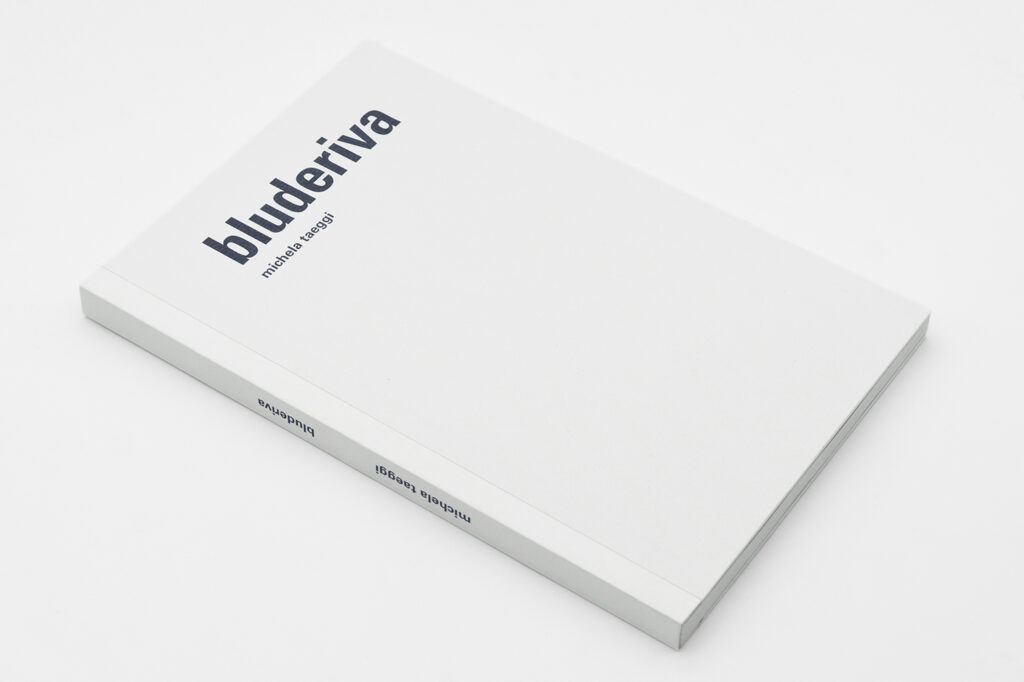
The project was documented photographically and published in a book, offering an in-depth overview of the participants’ experiences and interactions. This book does not only keep the collected messages but turns out to be a living archive of thoughts, secrets and shared dreams.
Progetto di arte partecipata – Castello Oldofredi (Iseo) 9-24/11 2024
Il messaggio in bottiglia ha una storia antichissima che risale a migliaia di anni fa, con il primo esempio documentato risalente all’antica Grecia. Il filosofo greco Teofrasto (circa 310 a.C.), discepolo di Aristotele utilizzava bottiglie per condurre esperimenti con le correnti oceaniche. Il suo obiettivo era quello di dimostrare che il Mar Mediterraneo era alimentato dall’Atlantico, inviando bottiglie in mare e osservando dove sarebbero approdate. Nulla di romantico e avventuroso dunque, il messaggio in bottiglia era originariamente utilizzato per scopi molto pratici e scientifici. Solo nel XX secolo assunse un valore simbolico e romantico. A seguito di alcune ricerche svolte in funzione di questo progetto, è emersa inaspettatamente una figura particolarmente interessante e misteriosa: the “Uncorker of Ocean Bottles” divenuto fonte di grande ispirazione.
The “Uncorker of Ocean Bottles” (stappatore di bottiglie oceaniche) fu una figura ufficiale istituita da Enrico VII, re d’Inghilterra dal 1485 al 1509. Il suo compito era di esaminare le bottiglie che arrivavano sulle coste britanniche, spesso trasportando messaggi di natura militare. Questi messaggi in bottiglia erano generalmente inviati da spie o marinai in difficoltà, contenenti informazioni vitali sui movimenti delle flotte nemiche, avvertimenti di attacchi imminenti o richieste di soccorso. L’interpretazione e la gestione di tali messaggi erano fondamentali per la strategia militare dell’epoca. La figura dello “stappatore di bottiglie oceaniche” rappresentava un legame tra il mare, simbolo di avventura e rischio, e la necessità di comunicazione in un contesto di guerra e diplomazia. Con il suo lavoro investigativo egli contribuiva a mantenere la sicurezza della nazione e a fornire informazioni essenziali per le decisioni strategiche. Questo ruolo ha lasciato un’eredità duratura nella storia della comunicazione marittima e rimane un simbolo del potere delle parole e dei messaggi, anche quando affidati alle onde del mare. “Bluderiva” è un progetto di arte partecipata che invita i visitatori a immergersi in una riflessione collettiva attraverso il potere simbolico del mare e il gesto intimo dello scrivere. In uno spazio espositivo avvolto da una grande proiezione video di un mare in movimento, i partecipanti sono stati invitati a scrivere il proprio messaggio in bottiglia ; un pensiero, una speranza, un segreto mai confessato o un desiderio personale. Le bottiglie, giorno dopo giorno, hanno invaso sempre di più lo spazio espositivo. L’opera evolve continuamente grazie al contributo del pubblico, diventando una mappa di emozioni, pensieri e sogni collettivi, navigando tra l’intimo e l’universale. Questo progetto intende esplorare il bisogno umano di comunicare oltre il proprio spazio e tempo, sottolineando il legame profondo tra l’individuo e il mondo che lo circonda.
Il progetto è stato documentato fotograficamente e pubblicato in un libro, offrendo una panoramica approfondita delle esperienze e delle interazioni dei partecipanti. Questo libro non conserva esclusivamente i messaggi raccolti ma risulta essere un archivio vivente di pensieri, segreti e sogni condivisi.
Act I





Act II
Installation – Bergamo 24/1 2026