“La cura per ogni cosa è l’acqua salata: il sudore, le lacrime o il mare”
— Karen Blixen
“Transizioni” nasce dall’osservazione delle saline in Camargue, dove l’acqua del mare, il calore del sole e l’azione del vento trasformano la costa francese in un paesaggio dalle sfumature rosa.
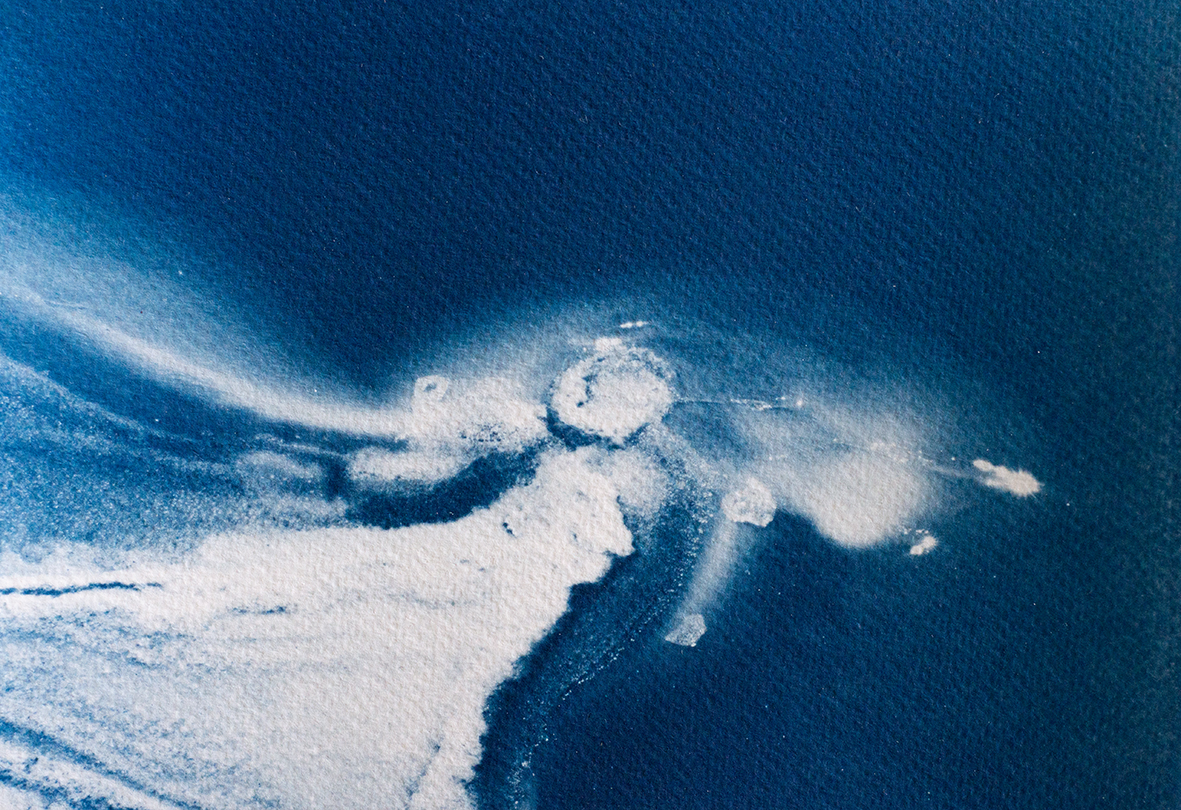
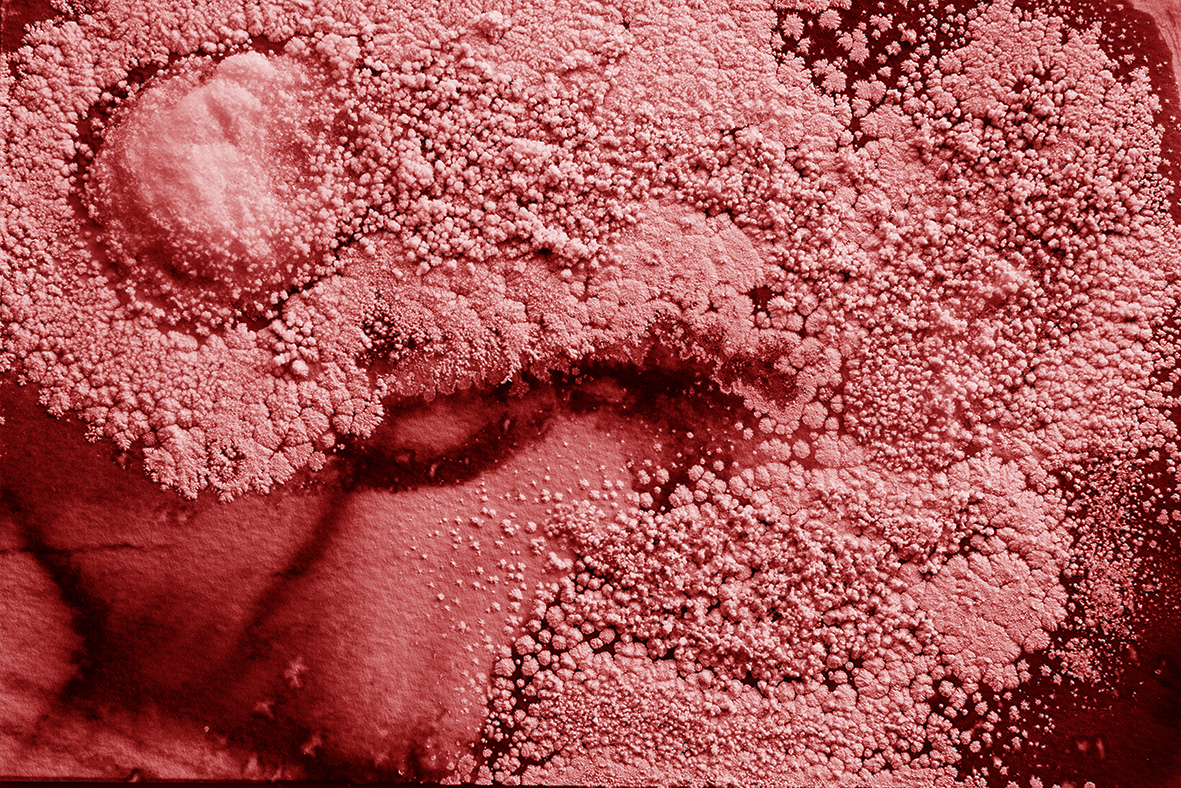
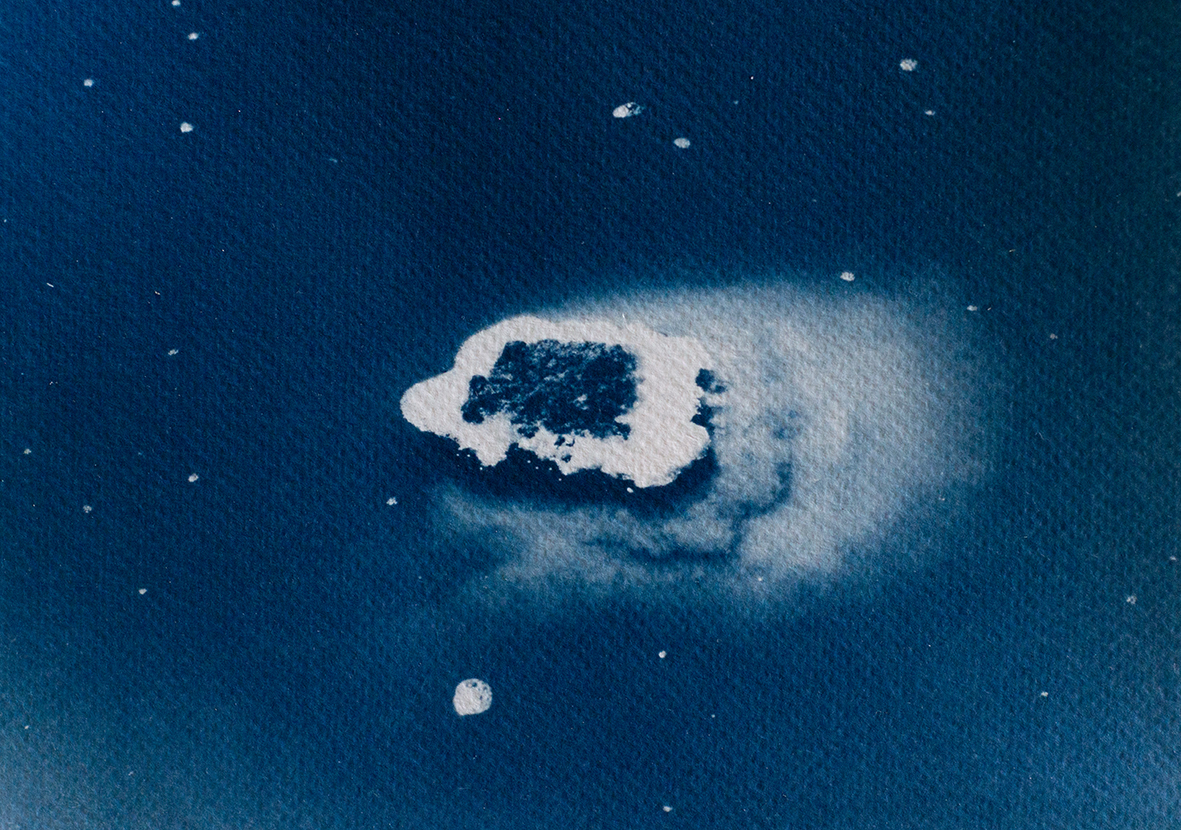
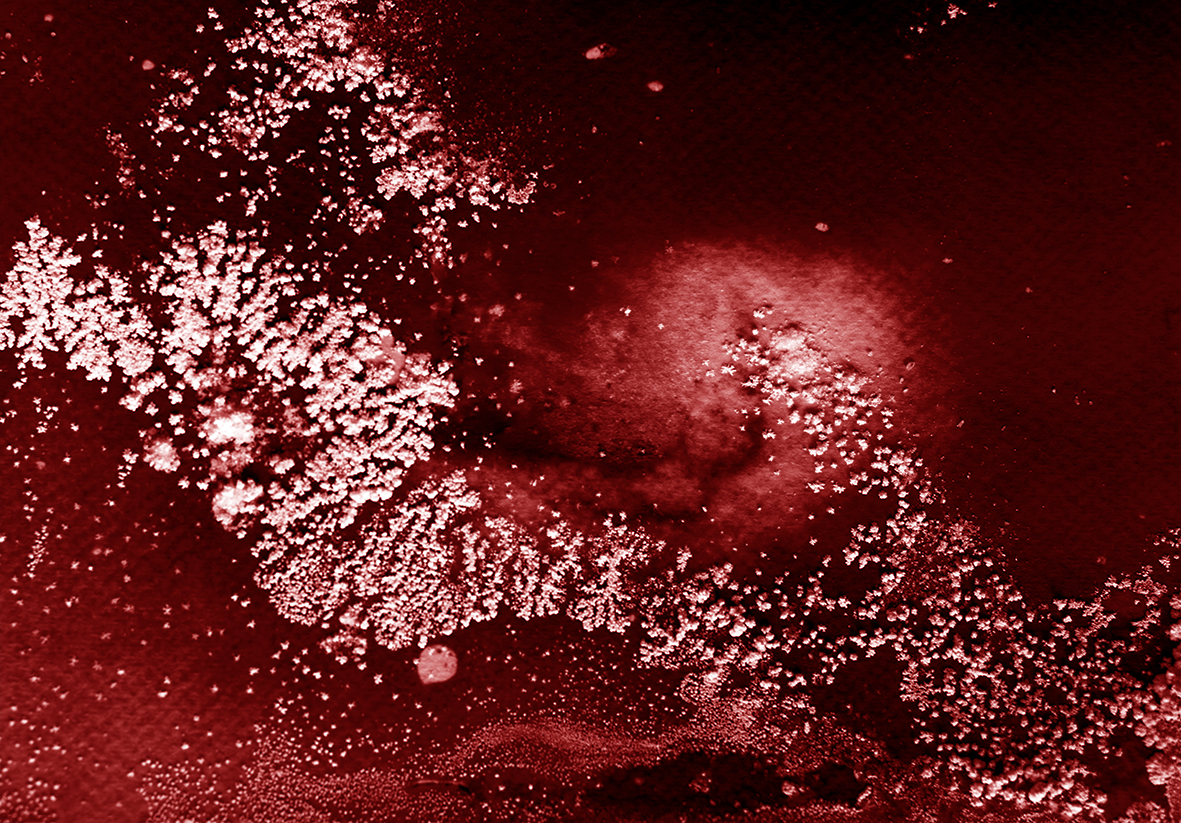
Le immagini fotografiche delle saline vengono riprodotte con la tecnica della stampa a contatto (cianotipia), assumendo così una nuova dimensione più vicina alla percezione che abbiamo del mare. Su queste superfici ora divenute di colore blu, interviene il sale; non più soltanto come soggetto rappresentato, ma come agente capace di agire direttamente sulla fotografia e trasformarla. L’immagine si altera, si deposita, si sposta. La stampa viene successivamente digitalizzata.
Il rosso ancestrale è un richiamo profondo al corpo, alla carne e ai suoi fluidi, sudore e lacrime che custodiscono la stessa essenza salina.
La fotografia diventa così un territorio di passaggio: ciò che viene osservato non coincide più con ciò che viene restituito.
“Transizioni” è la deriva tra rappresentazione e materia, tra ciò che permane e ciò che si trasforma. Il soggetto dell’immagine non è più soltanto fotografato, ma lascia una traccia concreta sulla fotografia stessa, riaccendendo quel legame viscerale con il corpo e aprendo a nuove interpretazioni.
“The cure for anything is salt water: sweat, tears, or the sea”
— Karen Blixen
“Transitions” stems from the observation of the salt marshes in Camargue, where seawater, the heat of the sun, and the action of the wind transform the French coast into a landscape of pink hues.
The photographic images of the salt pans are reproduced using the contact print technique (cyanotype), thus taking on a new dimension closer to our perception of the sea. Upon these surfaces, now turned blue, salt intervenes; no longer just as a represented subject, but as an agent capable of acting directly upon the photograph and transforming it. The image alters, settles, shifts. The print is subsequently digitized.
That ancestral red is not merely a color of the landscape, but a deep call to the body, to the flesh and its fluids — sweat and tears — which hold that very same saline essence.
Photography thus becomes a territory of passage: what is observed no longer coincides with what is returned.
“Transitions” is the drift between representation and matter, between what endures and what transforms. The subject of the image is no longer simply photographed, but leaves a concrete trace upon the photograph itself, rekindling that visceral bond with the body and opening up new interpretations.
Cyanotype on Saunders Waterford paper, salt and time.
100x20x4 cm
Unique piece
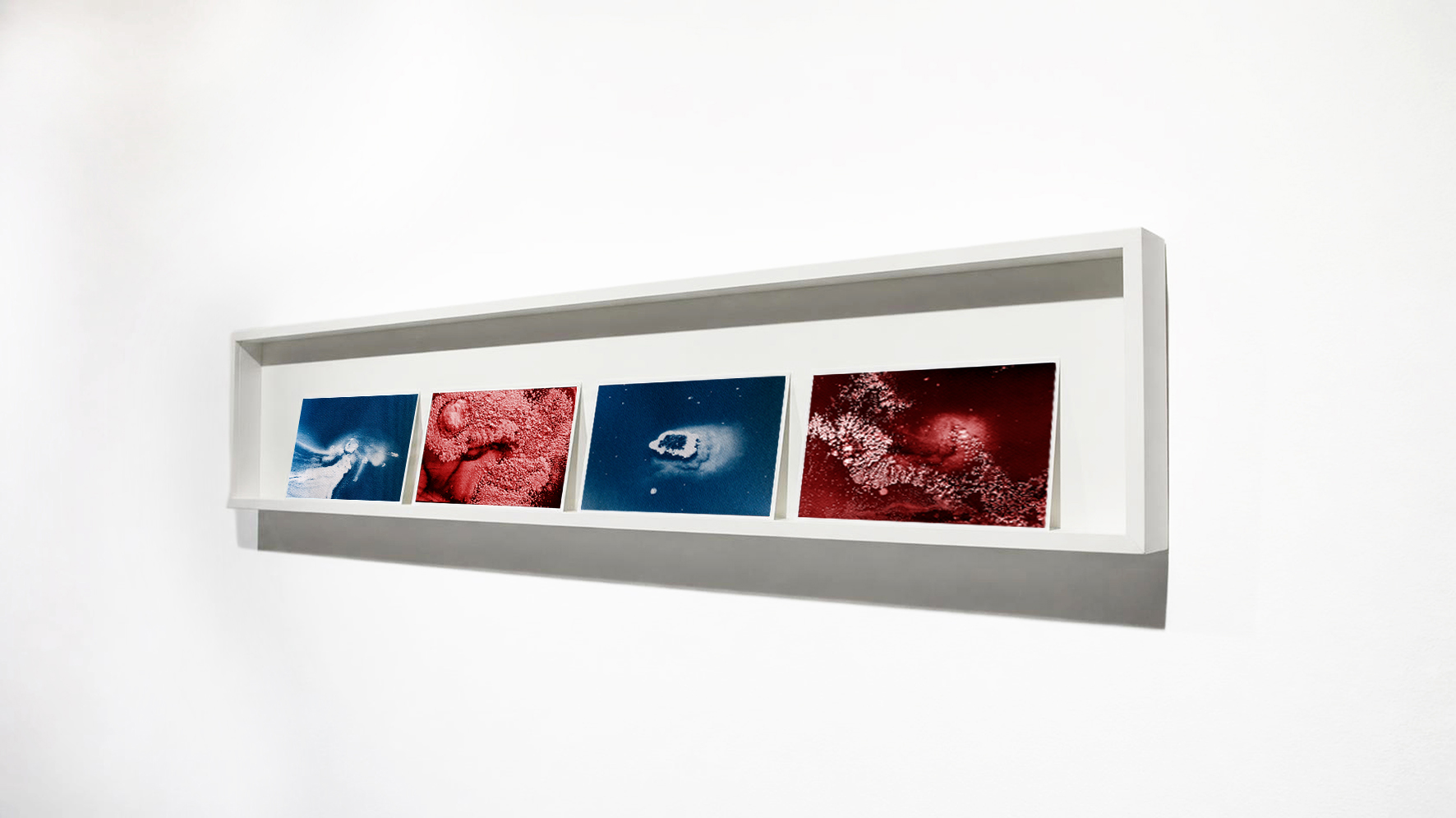
Installation mockup