Alicudi è una piccola isola che affiora dal mar Tirreno nel remoto arcipelago delle Isole Eolie. Una realtà lontana, dove la leggenda si è fatta storia.
Era il 1902 e i 713 abitanti di questo microcosmo, sembravano vivere sotto il peso di una misteriosa maledizione. Per tre lunghissimi anni sono stati ostaggi del mare, del vento e della terra. Alicudi aveva un lato oscuro: si pensava fosse popolata da streghe volanti, dette “mahare”, da presenze oscure che si aggiravano durante la notte e da uomini dalle fattezze di animali che si nascondevano tra le rocce scure che scendevano verso il mare.
Tra il paradiso e l’inferno c’era Alicudi, con i suoi campi di segale infestati dai “tizzoni”, piccole protuberanze nere come la pece. Piccoli occhi nefasti comparivano tra le spighe, spazzando via la tranquillità dell’isola. La popolazione era in preda a visioni, paure e tormenti.
Pochi anni dopo la scienza diede una risposta a quell’incubo collettivo: l’ipotesi più accreditata fu il consumo inconsapevole di segale cornuta, un fungo parassita il Claviceps purpurea, capace di innescare potenti effetti allucinogeni. Quella vicenda è passata alla storia come una delle più lunghe allucinazioni collettive mai documentate.
Il progetto Lunamare attraversa quel confine sottile tra mito e verità. L’ esperienza trascendentale prende forma attraverso la chimica alchemica della cianotipia, l’utilizzo di alcune immagini d’archivio e le rielaborazioni digitali. Le tonalità cobalto e le calde sfumature dei viraggi, evocano la notte e il mistero di un’isola che, ancora oggi, continua a stregare chi sceglie di credere alla sua storia. Dopo molti anni restano aperti alcuni interrogativi, ai quali forse, non riusciremo mai a dare una risposta.
Images from archive to Istituto italiano per le proiezioni luminose and Nasa.
Alicudi is a small island emerging from the Tyrrhenian Sea in the remote Aeolian archipelago. A distant reality where legend has become history.
It was 1902, and the 713 inhabitants of this microcosm seemed to live under the weight of a mysterious curse. For three very long years, they were hostages to the sea, the wind, and the land. Alicudi had a dark side: it was believed to be populated by flying witches, known as “mahare,” by dark presences roaming about at night, and by men with animal-like features hiding among the dark rocks descending toward the sea.
Between paradise and hell lay Alicudi, with its rye fields infested by “tizzoni,” small pitch-black growths. Sinister little eyes appeared among the ears of grain, sweeping away the island’s tranquility. The population was prey to visions, fears,and torments.
A few years later, science provided an answer to that collective nightmare: the most widely accepted hypothesis was the unwitting consumption of ergot, a parasitic fungus known as Claviceps purpurea, capable of triggering powerful hallucinogenic effects. That episode has gone down in history as one of the longest collective hallucinations ever documented.
The Lunamare project crosses that fine line between myth and truth. The transcendental experience takes shape through the alchemical chemistry of cyanotype, the use of archival imagery, and digital re-elaborations. The cobalt tones and warm nuances of the toners evoke the night and the mystery of an island that, to this day, continues to bewitch those who choose to believe in its story. After many years, several questions remain open, to which we may perhaps never find an answer.
Images from archive to Istituto italiano per le proiezioni luminose and Nasa.
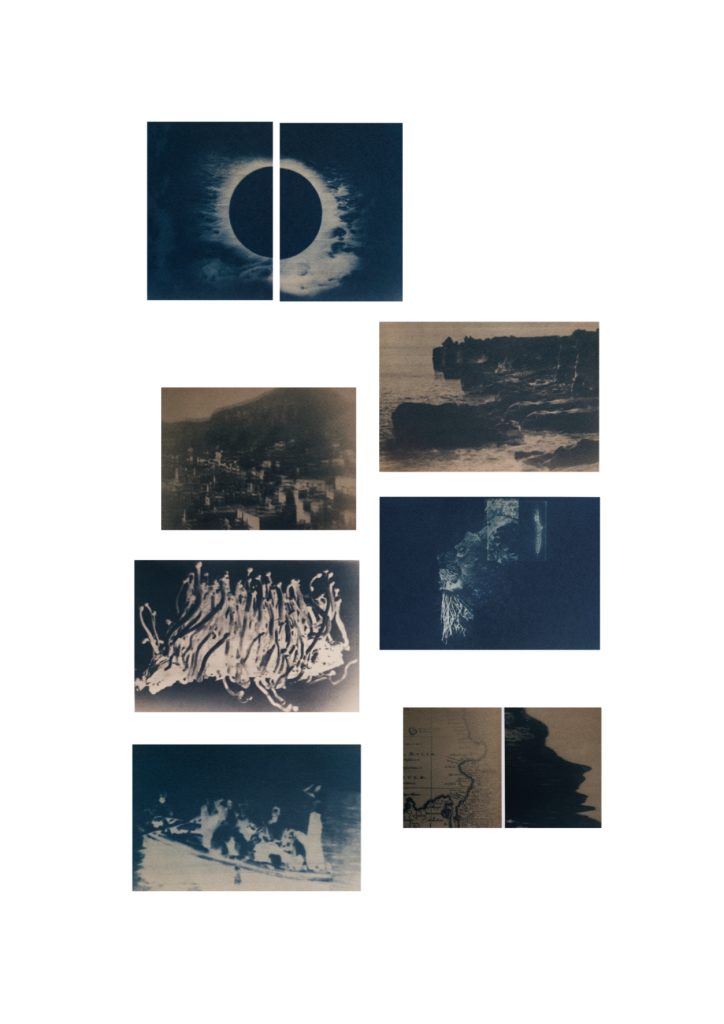
Toned cyanotypes on paper.